Building Your Team


Building your team means finding the experts. Once you find the experts, you need to learn to trust the experts and make space for other opinions, which can sometimes lead to losing your voice as a parent. Let's delve into it.
At this point you know that your child is struggling. You know that you don’t have the resources to support them alone and so you reach out for help. The diagnosis isn’t the goal, but rather understanding your child and supporting them in whatever way you can along the way. You don’t need to wait for a diagnosis to offer supports.
For example, if you are noticing that your child is struggling socially, you can look for an after school social group or sports team- this might really help. Maybe your child loves art and so you set them up with an art therapist. Perhaps you have noticed that homework is a difficult task and so your child has a tutor, or you’ve taken them to a visual therapist, or alternative therapies. Whether these extra supports help your child, or not doesn’t matter- because they give us information. If your child has a tutor but is not making progress, this is very useful information. If your child goes to an art therapist but doesn’t communicate in sessions- this is valuable information. If your child is thriving socially at soccer practice, but not at school- this is great to know!
If you have the energy, follow your instinct to try different supports. When you can come to the professionals with a list of what you have tried and what has helped and not helped your child, then they have a lot more to work with.
Who do you turn to?
Maybe you want to set up a meeting with your child’s teacher if you haven’t already shared your concerns, or even if you have- it's good to touch base again given the seriousness of the matter. Does the school have a learning centre? What is the teacher noticing about your child during class? Is your child participating? Are they meeting academic standards? How are they in the playground? Socially?
Share what you are noticing at home. What are the teacher’s thoughts? Are there any patterns? This won’t be the first time that the school has had a meeting of this kind. School is where your child is expected to spend most of his day, how your child is doing at school is an essential piece of the puzzle and collaboration with the school is key.
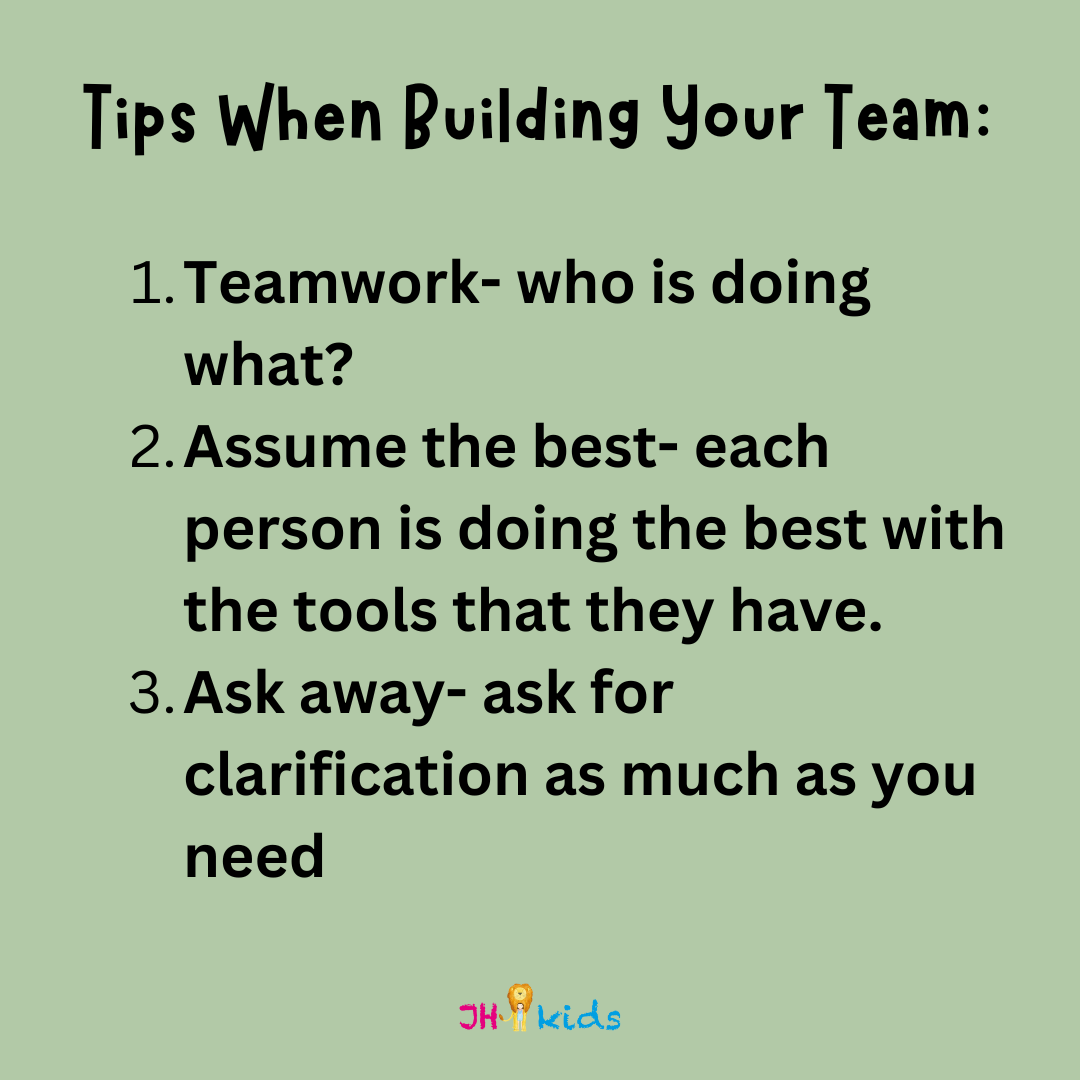
TIPS:
TEAMWORK- each time you meet with the school, you want to come away with the knowledge of what are the next steps that the school is going to take and what are the next steps that you are going to take. Collaboration is essential- that means everyone is doing their part to support your child, no one is expected to take that role on by themselves. We want to take a child centred approach. The child is the focus with all of us working together to support them. (But don’t forget that you too are experiencing something huge- and will need space for that too. More on that later).
ASSUME THE BEST- Assume that your child’s teacher means well and is doing the best with the resources that they have. Even if you don’t feel that it is ‘good enough’, we want to tap into their resources and strengths to work together. Perhaps they need education on your child’s learning profile and help in figuring out ways to make adjustments/accommodations/changes in the classroom.
ASK AWAY- Ask for clarification as much as you need.
Perhaps you turn to your family doctor, your General Practitioner to set up a meeting to discuss what is happening and ask for some guidance. Does your child need a Mental Health Plan? Maybe an assessment with a speech pathologist, an occupational therapist or a psychologist? You may want to ask how it works, how you can allocate your hours, whether your child may be eligible for support through the NDIS (National Disability Insurance Scheme).
Okay, so by now you have met some experts. How do you feel about them? Do you feel that you can work comfortably with them? Do you feel comfortable asking for clarification? Do you feel as though your voice is valued and heard? Do you feel like your child’s best interests are at the centre of all decisions? Are you leaving meetings/appointments feeling confident in your next steps? Who do you want to remain on your team?
Your team may consist of a family doctor, psychiatrist, therapist, occupational therapist, speech therapist, special education teacher, classroom teacher, school counsellor, horse riding therapist, animal therapist, yourselves. Does your team have discussions amongst themselves? Are you the point person?
You may have waited months for the best therapist, but the connection between them and your child is not there, or you might see that the neighbourhood soccer coach has a great relationship with your child and coaches them through difficult things. The type of therapy isn’t what matters, but rather it is the connections that are formed through them.
Each person is working together and doing their job to support this child. All with a different skillset and expertise. Your team should be made up (as best you can) of people that you feel comfortable sharing your concerns, hesitations and vulnerabilities with through this process.
What can sometimes happen is that once you have found your experts, and things are beginning to make sense for your child, you may lose your own voice, for example “Dr X recommends this”, or “the OT said this is how we should be doing things”, “the animal therapist suggests this approach”, and “teacher X said this is how we should be doing things” and sometimes (hopefully more often than not) these suggestions are aligned with each other and when they are not, or the suggestions are not feasible then you need to prioritize and trust your gut.
There comes a stage where you want to take a step back, look at all of these different opinions, and try what fits - not only for your child, but for your whole family unit and your lifestyle. And you will know best. A friend and colleague once gave the metaphor of a plate of food sitting in front of you at the table. There are many different foods. Potatoes, some peas, salad, chicken etc. but you don’t have to choose everything. You don’t have to eat it all. You eat some and you leave the rest. It is the same with expert opinions. Some advice and recommendations will resonate for you in relation to your child and some won’t.
If it doesn’t. that’s fine- leave it on your plate.

Here are some of my personal experiences-
*Side note-if I was to do another degree it would be to become an occupational therapist. I think they hold the secrets to understanding the mind/body connection and how to integrate them- couple that with social work and you have a winning team :)

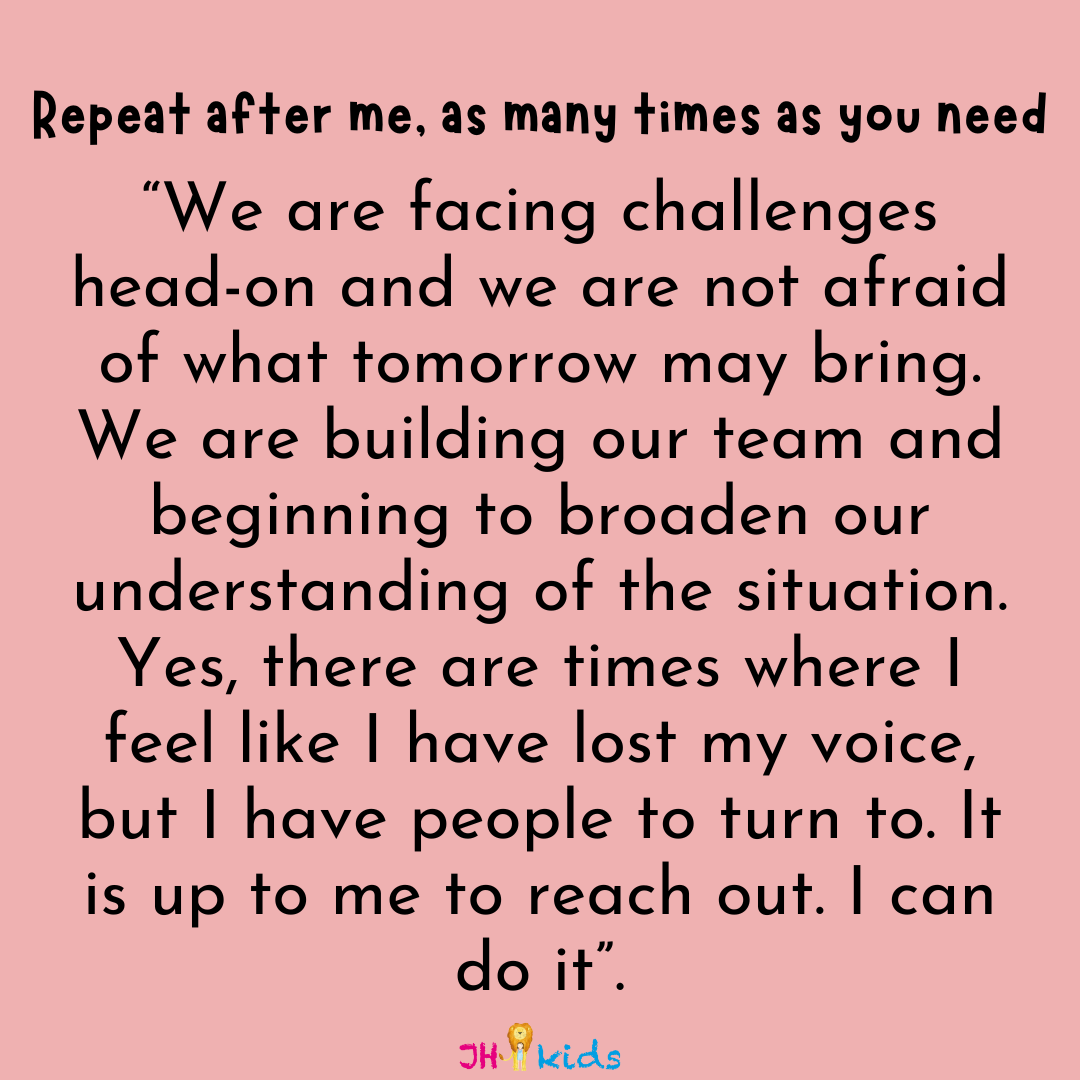
Okay, so you may or may not know that I talk to myself- a lot. Well, we all do, but I do it out loud. Here is an example, you can read it with your eyes or say it out loud- take it or leave it.
Repeat after me, as many times as you need:
“We are facing challenges head-on and we are not afraid of what tomorrow may bring. We are building our team and beginning to broaden our understanding of the situation. Yes, there are times where I feel like I have lost my voice, but I have people to turn to. It is up to me to reach out. I can do it”.
If you have an hour and want to understand more about why your child might be refusing to go to school, and what you can do to help them, check out this seminar by Jackie Hall from the Parental Stress Center.
This article is part 3 of an 8 part series- Parenting through a Neurodiverse Diagnosis.
Does your child need extra support?
Our expert Psychology & Occupational Therapy team can help. At JH Kids, we specialize in supporting children experiencing Autism, ADHD, Dyspraxia, and genetic disorders. Our focus is on supporting children and their families. We offer individualised care to help children build self-awareness, confidence, develop essential skills, and navigate challenges in a safe and understanding environment.
Enquire now to learn more
If you're looking for expert support for your child, we’re here to help.
Proudly supported by