Children process traumatic events differently than adults.
After witnessing or being close to others who wittnessed such terror, they may show changes in behaviour, including:
- Increased clinginess or separation anxiety
- Trouble sleeping or recurring nightmares
- Irritability, anger or emotional outbursts
- Withdrawn or “shut down” behaviour
- Physical complaints like stomach aches or headaches
- Re-living parts of the event through talk or play
- Avoidance of reminders of what happened
All these behaviours are normal reactions to an abnormal situation.
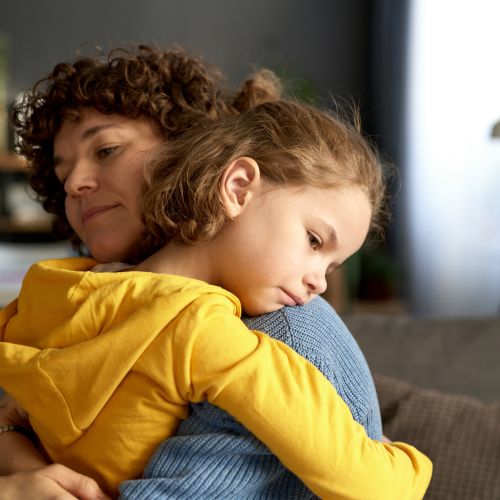
As parents and caregivers, the best support we can offer is presence, reassurance and open communication.
Practical ways to help include:
- Create a safe space to talk: Let children ask questions and share how they feel, and listen without judgement. Keep explanations simple and age-appropriate.
- Reassure them they are safe: Emphasise that the event was rare and that adults are working to keep them protected.
- Maintain routines: Predictable daily activities help children feel secure.
- Limit exposure to distressing media: Too much news can increase anxiety.
- Stay connected: Offer extra time, hugs and calm activities together.
- Seek extra help: Contact Jewish House for support from our experienced psychologists - or join our Peaceful Kids or Peaceful Parents program.
Check Out Our Video Resources
Videos for Parents
By Devorah Tockar

Devorah Tockar, Online Content Manager at JH Kids, is a mother and social worker based in central Israel. Drawing on both professional expertise and lived experience, this series offers practical tools for you and your family to navigate big emotions and build effective coping strategies during challenging times.
Introduction
Join us in this series as we explore big feelings, practical coping strategies, and move through this murky stage together.
My Fluffy Cushion
I'll let you in on a secret. I was able to make that introductory video because of my fluffy cushion. I was having a hard time getting started. You'll find similar items all over my home, and car, and handbag. Because they really help. Squish something, pull something, punch something, snuggle something, scratch something. It keeps you grounded.
Let’s talk about Pretending.
You might feel like you are pretending to function, that it isn’t the real part of you, that the real part of you feels shattered in a million pieces. Both parts of you are real and both parts can exist together. It isn’t pretending- it is living. You may need to separate parts of you in order to function- but you are functioning. Your body knows what it needs to do to get your family through each day. You are doing it. You are brave and strong and are getting through very hard things.
Feelings are Energy
Use the Energy. Last night I felt this surge of energy for the first time in three and a half weeks. I felt as though I could smash all the plates in my home, I felt angry energy and I needed to channel it. I paused and called a friend- telling them what I was feeling. I needed to scream at the beach, or go for a run or move my body in some way to get my heart rate up and sweat it out. All of that energy came from huge, very uncomfortable feelings. So I went to the gym, and I put on my angry music and I ran and cried and sweated it out. Don't ignore that energy when you feel it come- honour it by acknowledging it and giving it an avenue for expression.
One Month Later
Go slow. Your body is remembering that on Sunday one month ago you changed. Your sense of safety was compromised. If you are feeling broken, or anxious, or despondent, or antsy, or agitated – so are the rest of us! If you want to remember the day and talk about it, and retrace your steps- do it! If you want to go for dinner with your family and a swim- do it! Go slow today. Give yourself a huge hug. You are somehow getting through each day- today will be the same.
The Little Things
It can be very difficult to see any good in the big picture. The world somehow continues around us. Flowers bloom and the sun shines. People are going for runs and swims and walking their dogs, your child wakes up needing someone to help them with breakfast, or to give them a cuddle. Can you notice any good in the ‘little’ things? Did anyone say thank you today? Did your bus come on time? Did you narrowly miss stepping in doggy doo on your walk? Did your child smile or share a silly joke? Are there ‘little’ things, moments of kindness, or moments of connection that you can notice in your day? Are there ‘little’ things, little moments of connection that you can offer today?
Notice them, when we link one to the next you may look back and see that it was the ‘little’ things that got you through.
Heirarchy of Feelings
I have been having a lot of conversations with people in Sydney and out of Sydney, and in almost every conversation the notion of “feeling guilty for feeling my feelings” or as I like to call it- the hierarchy of feelings- who should be allowed to feel what, has come up. Comments like “it wasn’t so bad”, “others had it worse” might be a way to ease into the deep pain you are actually experiencing, and could be because you don’t feel that it is accepted by society for you to be feeling so bad. But it takes energy to fight the feelings, to push back and say “I should be able to function right now”. Rather direct your energy to not functioning 100%, getting to know this version of yourself and to feel the feelings that you are actually feeling.
Who Supports Whom?
How are we able to remain strong for those who we love the most during a crisis? By knowing which way to lean. In the 'concentric circles of support,' the person at the centre is the one most impacted. They should feel safe to crumble and fall apart with those closest to them whose job it is to catch them. But to have the strength to catch them, we must lean outward to our own support systems. We provide comfort to those closer to the crisis than us, and we seek support from those further away. By leaning out, we find the stability to stand strong for those in the centre.
For example, when I went to Sydney to support my best friend and her family, I could only be fully present for them because I leaned on my own outer circle. My community bound together to organise meals, playdates, and shopping for my family back home. Their support was the 'outer ring' that gave me the strength to stand firmly in the inner ring for my friend.
Savour the Moment
When something scary happens, our bodies take over. Our senses sharpen, our attention narrows, and we’re pulled fully into the moment, because that’s how we’re wired to survive. But sometimes our body reacts when there isn’t an immediate threat. We don’t get to decide when or how those strong reactions show up. Our body knows what to do as our chest tightens, our minds race, we become edgy and hypervigilant. This is not weakness, it’s our negativity bias, our brain and nervous system locking onto threat because they believe that’s how we stay safe. It is a full body experience, whether we like it or not- all of our attention is grabbed.
But what about the pleasant moments? We daydream through them, multitask and then they pass. Our brains aren’t wired to hyperfocus on them. I want to suggest that we savour those moments, with as much gusto as we do for the less pleasant experiences- intentionally use your senses to slow down the moment- what does the laughter sound like, what does their hand in yours feel like? What can you smell in your child’s sweaty hair, or what does it feel like to be cuddled tightly? Stay with it for a few extra seconds.
Make the moments linger, savour them!
Routine
After everything our community has been through, many parents are asking: How do we create stability when life feels anything but stable?
This video is about simple routines - not to be perfect, but to give both parents and children a sense of predictability which creates a feeling of safety. Find three things to do each day that make you feel like a functioning human. Let it be one thing for YOU, one point of connection and one thing in nature. Have a cup of tea without scrolling, step outside into the sunshine, have a shower, read your child a book, check in with a friend, respond to one message.
Ask your children what they would include as their daily/weekly routine. Choose just three daily and three weekly anchors that feel doable. Small actions done consistently can help calm our nervous systems and remind us: we are still here, and we are still capable.
Miss a day? That’s okay. Tomorrow is a new day.
Mental Health Continuum
Mental Health is not the absence of mental Illness. It is a continuum.
How you are feeling mentally can change over time. We oscillate between healthier and less healthier states.
Sometimes we flourish, sometimes we struggle, sometimes we are in crisis. It feels good to be flourishing. It does not feel good to be in crisis. We might not even be able to access our thinking brain when we are in crisis.
Have a think about where you are sitting on the continuum, and where your child sits on the mental health continuum. Can you notice any patterns? Have things changed over the last two months and you don’t recognise yourself anymore? If you find that you are sitting somewhere in the middle, for an extended period of time- reach out for help. Don’t wait for the crisis. Help is only going to help you move to a space where you are struggling less.
Tell Me More
After a frightening event, our brains don’t store the events neatly with a bow. It doesn’t automatically create the beginning, middle and end. Often what happens is that we get stuck in the danger. We get stuck in the scary part, and don’t know how to move past it.
When I was in Sydney after the Bondi attack, I met with many parents who were at the Chanukah event with their children, and if I gave them one message it was this- “end the story in safety!”
If you find your child getting stuck, you can move them gently along by prompting what came next, and after that until they were home safely with you. You can help them fill in the gaps if they get stuck.
A few years ago, I made a two-part video about storytelling and integration if you want to understand it in more depth.
You can check them out here:
Part 1- https://youtu.be/7zVhzjkLRZI
Part 2- https://youtu.be/7zVhzjkLRZI
Resilience Rollercoaster
It has been four months since the terrorist attack at Bondi Beach.
Trauma recovery doesn't happen in a flat line. There are lows, and then even deeper lows, that can feel intense, scary and unpredictable. In this video, I explain the Resilience Rollercoaster. When those 'big feelings'—the anxiety, the fear, the deep sadness—hit, the intensity might still feel just as sharp as it did on day one.
But your body is remembering this feeling, and knows that you can feel it deeply and still come through it. Because your nervous system remembers the track, it doesn't stay in the 'dip' for as long and those 'dips' happen less often as your body begins to recognise safety again.
If you find that you or your child are stuck in the depth of pain for prolonged periods of time, with barely any chance to catch your breath- please reach out!
Reducing the Emotional Load
For the last 5 months, many of us are carrying more than usual- sometimes what feels insurmountable.
Can distraction be a helpful strategy for us and our children?
This video explores when distraction actually helps reduce emotional overload, and how parents can recognise whether it’s supporting their child or masking deeper distress.
Don't Think, Just Do?
“Don’t think, just do.” I grew up hearing this phrase, but it took me 39 years to begin to understand what it really means.
I’ve been thinking a lot about grief and how differently it shows up in each of us, and how differently it shows up in our children. Some of us cry easily. Some of us don’t cry at all. Some of us stay busy. Some of us shut down. Some of us talk. Some of us avoid talking. And our kids do the same, not because they’re doing it wrong, but because their nervous system is doing what it knows how to do.
Trauma informed care teaches us something simple: people use the coping tools they have access to. If a strategy helps someone get through the day, stay connected, and keep functioning, even if it doesn’t look ideal to you, it’s serving a purpose. It’s keeping them afloat.
Functioning doesn’t mean feeling good or being strong. It means:
• getting through the day
• caring for basic needs
• staying connected to at least one person
• showing up for your children in some capacity
• keeping yourself safe
If that’s happening, even messily, their coping is valid. Support it. Respect it. And if the time comes when their strategy stops working, they’ll feel it. That’s when you gently help them explore new options, on their terms, not yours.
This video is for anyone who is coping and functioning, even messily. Maybe you're not thinking, just doing, and maybe you're not. This video is a reminder that your way of coping, and your child’s way of coping - is valid.
This Is Not An Emergency
Lately I’ve noticed my nervous system slipping into emergency mode over everyday moments: noise, rushing, notifications, kids needing me all at once.
So I’ve been practicing something simple: pausing, checking the facts, and reminding myself, “This is not an emergency.”
It’s not about being calm all the time. It’s about retraining my brain, widening my window of tolerance, and teaching my nervous system that everyday life doesn’t need an alarm.
If your body has been on high alert lately, you’re not alone. Our nervous systems can learn safety again - one small pause at a time.
Videos for Children
Busy Brain Breaks
We’ve created a standalone page especially for children - a safe space where they can browse short, simple video activities whenever their brain or body feels too busy.
These activities are evidence-based and support emotional regulation, safety, and recovery after stress or trauma. They can all be done using everyday items you already have at home — no special equipment or purchases needed.
You might choose to explore the videos together, or let your child watch on their own, knowing everything has been thoughtfully created for children to access independently and at their own pace.


Explore Additional Resources
In this series, we explore practical strategies and research-backed coping mechanisms to support both yourself and your children through life’s challenges.
Most of this video series was recorded in the months immediately following October 7, 2023. However, the messages of empowerment, encouragement, hope, and support remain timeless, as we each face challenging realities throughout our lives.
Devorah Tockar, Online Content Manager at JH Kids, is a mother and social worker based in central Israel. Following October 7, 2023, her family's life was profoundly disrupted, requiring individuals and families to adapt day by day. This series draws on her personal and professional experience, to give practical tools that you and your family can use.
If you're looking for expert support for your child, we’re here to help. Enquire now to learn more.
You are not alone — connection and compassion are important to help kids heal.